
Introduction:Donald Trump
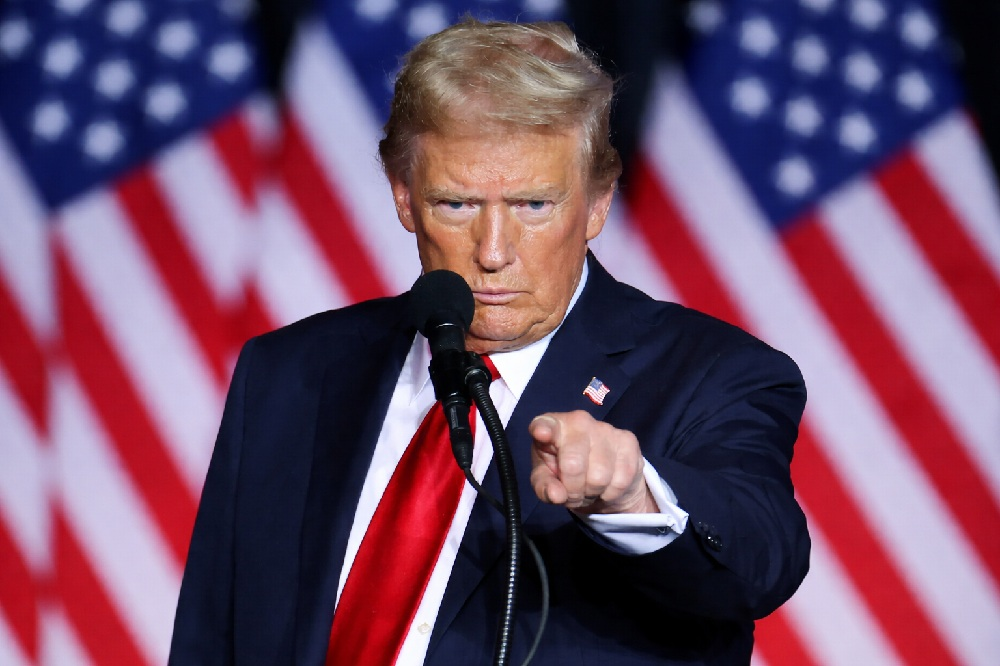
Donald John Trump (born June 14, 1946) is an American politician, media personality, and businessman who served as the 45th president of the United States from 2017 to 2021 and is currently serving as the 47th president since 2025. A figure of immense influence and controversy, Trump’s career has spanned real estate, entertainment, and politics, fundamentally reshaping the modern Republican Party and American political discourse. His return to the presidency after a single-term hiatus marks a historic political comeback, making him one of the few individuals to hold the office in non-consecutive terms.
Table of Contents
Early Life and Education
Donald John Trump was born in Queens, New York City, the fourth of five children of Fred Trump, a prominent real estate developer, and Mary Anne MacLeod Trump, a Scottish immigrant. Growing up in a wealthy household, Trump was exposed to the family business from a young age. His father’s focus on constructing and managing middle-income housing in Brooklyn and Queens provided a formative education in real estate economics and cost-control.
After displaying behavioral issues in traditional schooling, his parents enrolled him at the New York Military Academy at age 13. The institution instilled in him a sense of discipline and competitiveness. He later attended Fordham University before transferring to the Wharton School of the University of Pennsylvania, graduating in 1968 with a bachelor’s degree in economics. His time at Wharton, a top-tier business school, fueled his ambition to move beyond his father’s outer-borough projects and into the world of high-stakes Manhattan real estate.
Business Career and Media Persona
Upon graduating, Trump joined his father’s company, Elizabeth Trump & Son. He aggressively pivoted the business from its focus on affordable housing, rebranding it as The Trump Organization and setting his sights on prestigious, large-scale developments in Manhattan.
His early major projects, including the renovation of the Commodore Hotel into the Grand Hyatt and the construction of the iconic Trump Tower on Fifth Avenue, established him as a symbol of 1980s opulence and ambition. His portfolio expanded to include casinos in Atlantic City, luxury hotels, residential towers, and golf courses worldwide. While his brand became synonymous with luxury, his business career was also marked by a series of high-profile corporate bankruptcies and legal disputes, leading to a complex and often-criticized financial legacy.
Trump’s celebrity status skyrocketed in 2004 with the launch of the reality television series “The Apprentice.” As its host and executive producer, he was projected into American living rooms as the ultimate arbiter of business success, with his catchphrase “You’re fired!” becoming a cultural touchstone. This role transformed him from a tabloid fixture into a mainstream cultural icon, cultivating an image of decisive leadership that would later prove crucial to his political ascent.
First Presidency (2017–2021)
Trump announced his candidacy for president in 2015, running on a platform of economic nationalism, stringent immigration control, and an “America First” foreign policy. His unorthodox, blunt communication style and ability to connect with working-class voters alienated by political elites propelled him to a stunning victory in the 2016 election.
As the 45th president, his key accomplishments included:
- Domestic Policy: Signing the Tax Cuts and Jobs Act of 2017, which lowered corporate and individual tax rates; appointing three conservative Supreme Court justices, Neil Gorsuch, Brett Kavanaugh, and Amy Coney Barrett, solidifying a 6-3 conservative majority; and pursuing significant deregulation across multiple sectors.
- Economic Policy: Overseeing a period of low unemployment and stock market growth prior to the COVID-19 pandemic.
- Immigration: Implementing travel bans affecting several predominantly Muslim countries, declaring a national emergency to fund a border wall with Mexico, and instituting a policy of family separations for those crossing the border illegally.
- Foreign Policy: Renegotiating trade deals such as the United States-Mexico-Canada Agreement (USMCA), engaging in unprecedented direct diplomacy with North Korean leader Kim Jong Un, and taking a hardline trade stance against China.
His first term was also marked by intense political polarization. He was impeached by the House of Representatives in 2019 for abuse of power and obstruction of Congress related to pressure he put on Ukraine to investigate Joe Biden, but was acquitted by the Senate. His presidency was defined by his prolific and controversial use of Twitter to communicate directly with the public, bypassing traditional media.
Post-Presidency and Return to Power
Trump lost the 2020 presidential election to Democrat Joe Biden. His refusal to concede, unsubstantiated claims of widespread voter fraud, and efforts to overturn the results culminated in the January 6th Capitol riot. He was subsequently impeached for a second time, this time for incitement of insurrection, and was again acquitted by the Senate.
Despite leaving office, Trump remained the de facto leader of the Republican Party, wielding significant influence over its direction and endorsing candidates who aligned with his “America First” movement. He announced his candidacy for the 2024 election, seeking to become only the second president in U.S. history to win non-consecutive terms.
In a historic political comeback, Trump won the 2024 presidential election and was inaugurated as the 47th President of the United States in January 2025, with JD Vance as his vice president.
Personal Life and Legacy
Donald Trump has been married three times: to Ivana Trump (1977–1992), with whom he has three children—Donald Jr., Ivanka, and Eric; to Marla Maples (1993–1999), with whom he has a daughter, Tiffany; and to Melania Trump (2005–present), the former First Lady, with whom he has a son, Barron.
Donald Trump’s legacy is deeply contested. To his supporters, he is a courageous outsider who disrupted a corrupt political system, championed the American worker, and stood up for national sovereignty. To his critics, he represents a threat to democratic institutions, whose rhetoric has exacerbated political and social divisions.