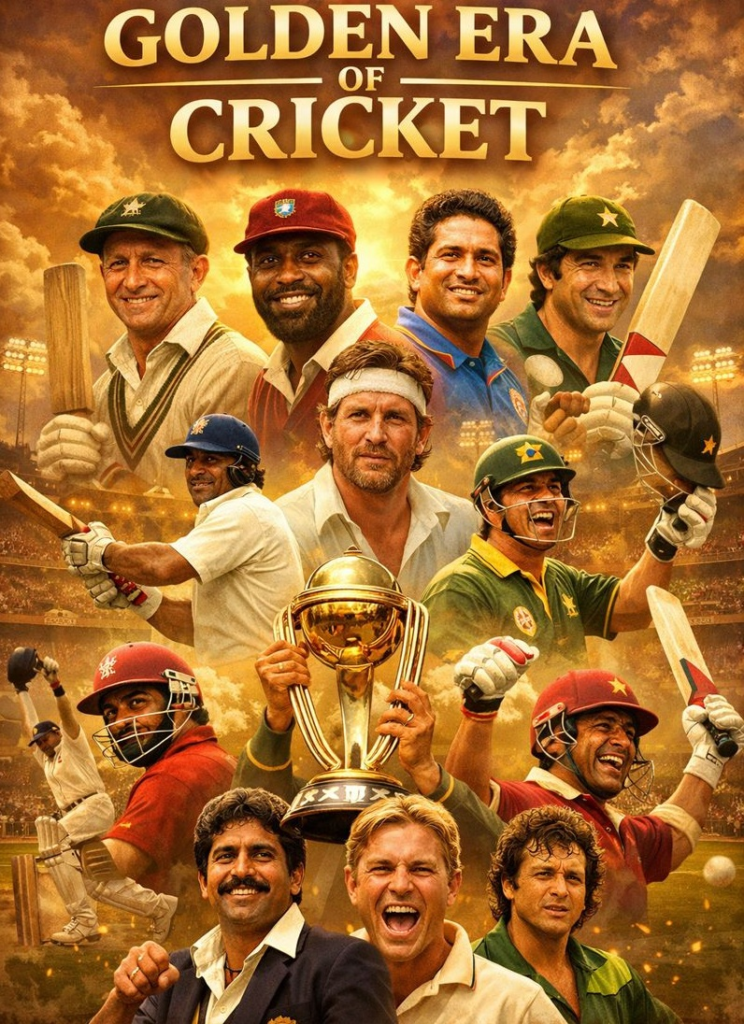

Introduction:Golden Era of Cricket
Cricket is more than just a sport; it is a legacy that has evolved across generations, cultures, and continents. Over its long and fascinating history, cricket has witnessed several golden eras—periods marked by exceptional talent, unforgettable matches, revolutionary changes, and global growth. Each era has contributed uniquely to shaping the modern game we enjoy today.
Table of Contents
Understanding the Concept of a “Golden Era” in Cricket
A golden era in cricket is not defined by a single factor. Instead, it represents a period where multiple elements come together:
- Presence of legendary cricketers
- High-quality competitive matches
- Evolution in techniques and strategies
- Increased fan engagement and global reach
- Memorable tournaments and historic achievements
With this in mind, let us journey through the most celebrated eras in cricket history.
1. The Early Foundations Era (1900–1930)
Birth of Competitive International Cricket
The early 20th century laid the foundation for international cricket. Test cricket was the only recognized format, and the game was dominated by England and Australia. Matches were timeless, played over several days without any limitation on overs.
Key Highlights
- The Ashes became the most iconic rivalry in cricket
- Cricket emphasized technique, patience, and sportsmanship
- Amateur and professional cricketers played together
Legendary Figures
- Sir Jack Hobbs – One of the greatest opening batsmen of all time
- Victor Trumper – Known for his elegance and attacking style
- Wilfred Rhodes – A remarkable all-rounder
Why This Era Was Golden
This period established cricket’s core values—discipline, technique, and respect for the game. It created the blueprint for all future generations.
2. The Bradman Era (1930–1948)
The Age of Don Bradman
No discussion of cricket’s golden eras is complete without mentioning Sir Donald Bradman. This era is often named after him because of his extraordinary dominance.
Unmatched Greatness
Bradman’s Test batting average of 99.94 remains the most astonishing statistic in sports history. He redefined batting excellence and mental strength.
Era Characteristics
- Strong rivalry between England and Australia
- Cricket during challenging times like the Great Depression and World War II
- Emphasis on resilience and adaptability
Other Notable Players
- Len Hutton
- Bill O’Reilly
- Keith Miller
Why This Era Was Golden
The Bradman era elevated cricket to legendary status and inspired generations to pursue excellence beyond limits.
3. Post-War Revival Era (1948–1960)
Cricket Finds New Life
After World War II, cricket experienced a revival. Nations were rebuilding, and cricket became a source of hope, unity, and entertainment.
Expansion of International Cricket
- Rise of West Indies as a competitive force
- Improvement in fielding standards
- Balanced contests between bat and ball
Icons of the Era
- Sir Frank Worrell – A transformational leader for West Indies
- Everton Weekes – Part of the famous “Three Ws”
- Neil Harvey – Australian batting legend
Why This Era Was Golden
It marked the global spread of cricket beyond England and Australia, setting the stage for a truly international sport.
4. The West Indies Dominance Era (1970–1985)
Rise of the Caribbean Kings
This era is widely regarded as one of the most thrilling golden periods in cricket history. The West Indies team dominated world cricket with unmatched aggression and flair.
Fearsome Fast Bowling
The West Indies were known for their intimidating pace attack:
- Malcolm Marshall
- Michael Holding
- Joel Garner
- Andy Roberts
Batting Brilliance
- Viv Richards – Symbol of fearless batting
- Clive Lloyd – Inspirational captain
- Gordon Greenidge
Major Achievements
- Winners of the first two Cricket World Cups (1975, 1979)
- Longest period of dominance in Test cricket
Why This Era Was Golden
It redefined power, confidence, and athleticism in cricket, turning matches into spectacles.
5. The 1980s–1990s: Global Expansion Era
Cricket Goes Truly Global
This era witnessed the rise of new cricketing nations and increased competitiveness. Television brought cricket into millions of homes.
India’s Cricket Revolution
- Kapil Dev’s leadership in the 1983 World Cup changed Indian cricket forever
- Cricket became a national passion in India
Legendary Players of the Era
- Imran Khan (Pakistan)
- Javed Miandad
- Sunil Gavaskar
- Allan Border
- Richard Hadlee
Introduction of One-Day Cricket
ODIs gained massive popularity, changing batting strategies and making the game more viewer-friendly.
Why This Era Was Golden
It democratized cricket, allowing more nations to compete and creating a larger global fanbase.
6. The Sachin Tendulkar Era (1990–2010)
The Era of the Little Master
For millions, this period is synonymous with Sachin Tendulkar. His career spanned two decades and inspired an entire generation.
Defining Features
- Rise of cricket superstars
- Professionalism and fitness became crucial
- Increased commercialization and sponsorships
Other Legends of the Era
- Brian Lara – Record-breaking brilliance
- Shane Warne – Revival of leg-spin
- Wasim Akram – Master of swing bowling
- Jacques Kallis – Ultimate all-rounder
Memorable Moments
- Lara’s 400* in Tests
- Warne’s “Ball of the Century”
- Tendulkar’s 100 international centuries
Why This Era Was Golden
It combined tradition with modernity and turned cricketers into global icons.
7. The T20 Revolution Era (2005–2015)
Birth of a New Format
The introduction of Twenty20 cricket transformed the game dramatically. Faster, shorter, and more entertaining, T20 cricket attracted younger audiences.
Indian Premier League (IPL)
- Changed cricket’s financial landscape
- Brought international players together
- Increased opportunities for young talent
Stars of the Era
- MS Dhoni – Calm and successful leader
- Chris Gayle – T20 powerhouse
- AB de Villiers – 360-degree batting
Why This Era Was Golden
It reinvented cricket, ensuring its survival and popularity in the modern entertainment world.
8. The Modern Era (2015–Present)
Technology and Data-Driven Cricket
Modern cricket is defined by innovation:
- Decision Review System (DRS)
- Advanced analytics
- Enhanced fitness and athleticism
All-Format Legends
- Virat Kohli – Consistency across formats
- Joe Root – Technical excellence
- Kane Williamson – Calm leadership
- Steve Smith – Unorthodox brilliance
Balanced Competition
No single team dominates for long, making cricket more exciting and unpredictable.
Why This Era Is Golden
It represents the perfect blend of skill, science, and entertainment.
Comparing the Golden Eras of Cricket
Each golden era stands out for different reasons:
- Early eras focused on technique and tradition
- Middle eras showcased dominance and flair
- Modern eras emphasize innovation and inclusivity
Rather than ranking them, it is better to celebrate how each era contributed to cricket’s timeless appeal.
Impact of Golden Eras on Cricket Fans
Golden eras do more than produce great players—they create memories, heroes, and emotions that last a lifetime. Fans often associate their love for cricket with the era they grew up watching.
Conclusion: Cricket’s Timeless Golden Journey
Cricket’s beauty lies in its ability to evolve while preserving its soul. From the classical elegance of early Test cricket to the electrifying energy of T20 leagues, every golden era has added a new dimension to the game.
There is no single Golden Era of Cricket—instead, cricket is blessed with multiple golden chapters, each shining in its own way. As the game continues to grow, future generations will undoubtedly witness new golden eras, creating fresh legends and unforgettable moments.